Wisdom Tooth Pain: When Should You Remove It?
By Dr. Lynn | GH Goh Dental Surgery, Singapore
Wisdom teeth are unpredictable.
For some people, they come through without a single issue. For others, they become a persistent source of pain, swelling, and frustration.
What I see most often in the clinic is patients who have been living with wisdom tooth discomfort for weeks, sometimes months, hoping it will resolve on its own. Occasionally it does. But far more often, ignoring it only allows the problem to develop into something more complex and more difficult to treat.
In this article, I want to explain why wisdom teeth so often cause problems, what the key symptoms look like, what can happen if they are left untreated, and how we decide together whether extraction is the right step for you.
Why Do Wisdom Teeth Cause Problems?
Wisdom teeth, or third molars, are the last teeth to emerge, typically between the ages of 17 and 25. The problem is that the human jaw has become smaller over thousands of years of evolution, while the number of teeth has stayed the same. That means there is often simply not enough room for wisdom teeth to come through properly.
When space is insufficient, several things can happen:
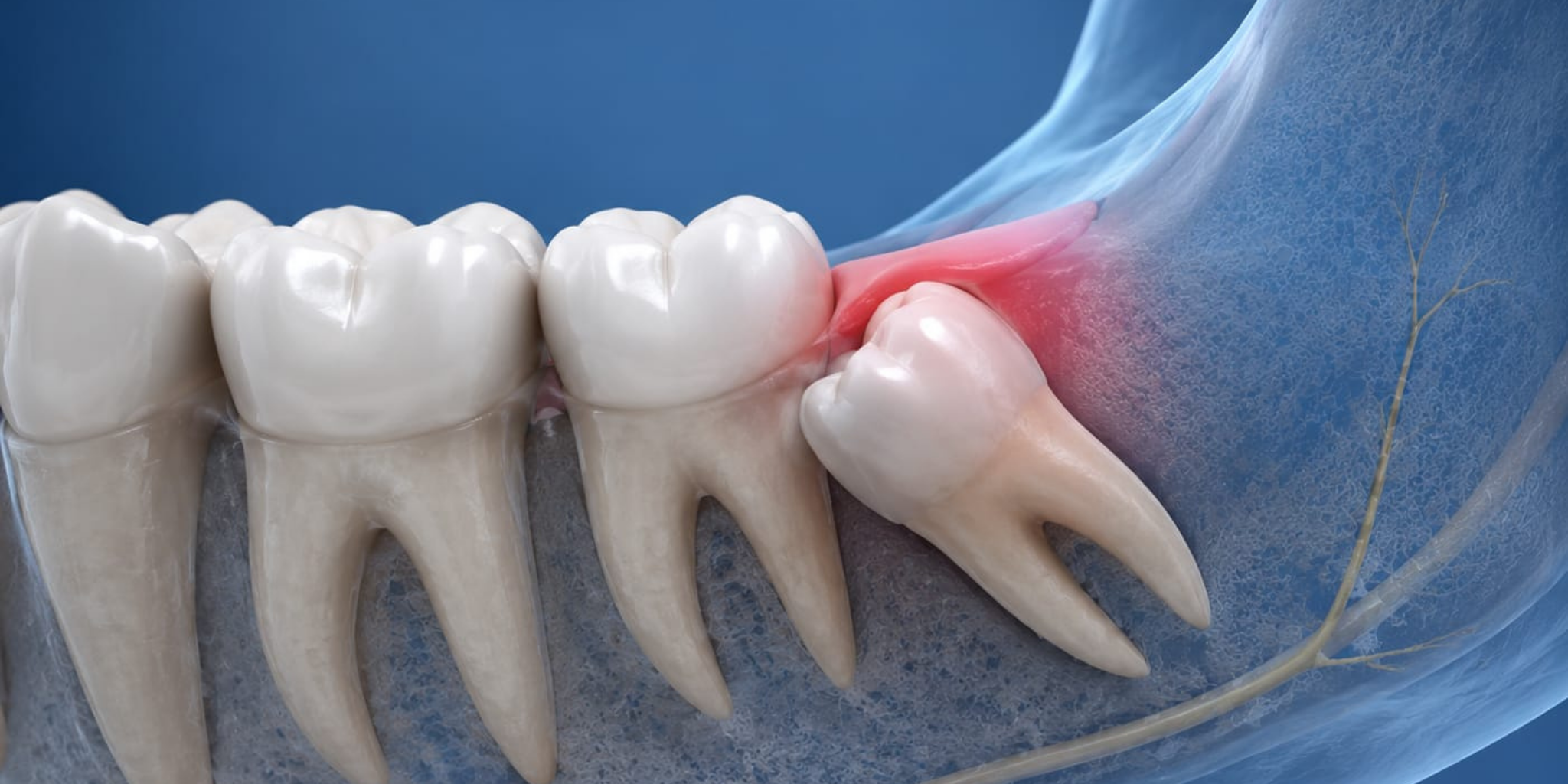
- The tooth grows in at an angle, pressing into the tooth beside it
- The tooth only partially emerges, leaving part of it trapped beneath the gum
- The tooth becomes fully impacted, meaning it never breaks through the surface at all
- A flap of gum tissue forms over a partially erupted tooth, creating a pocket where bacteria can collect
Any of these situations can lead to pain, infection, and damage to the surrounding teeth and bone.
Symptoms of a Problematic Wisdom Tooth
1. Persistent Pain or Pressure at the Back of the Mouth
Some mild discomfort during the eruption process is normal and expected. What is not normal is pain that lasts for more than a few days, intensifies over time, or radiates toward the jaw, ear, or temple.
Wisdom tooth pain often feels like a deep, dull ache at the very back of the mouth. It can be constant or come and go, but if it keeps returning, it is telling you something that deserves attention.
⚠ When is it urgent? If the pain is disrupting your sleep or making it difficult to open your mouth fully, do not wait, contact us promptly for an assessment.
2. Swollen, Red, or Bleeding Gum Tissue Around the Tooth
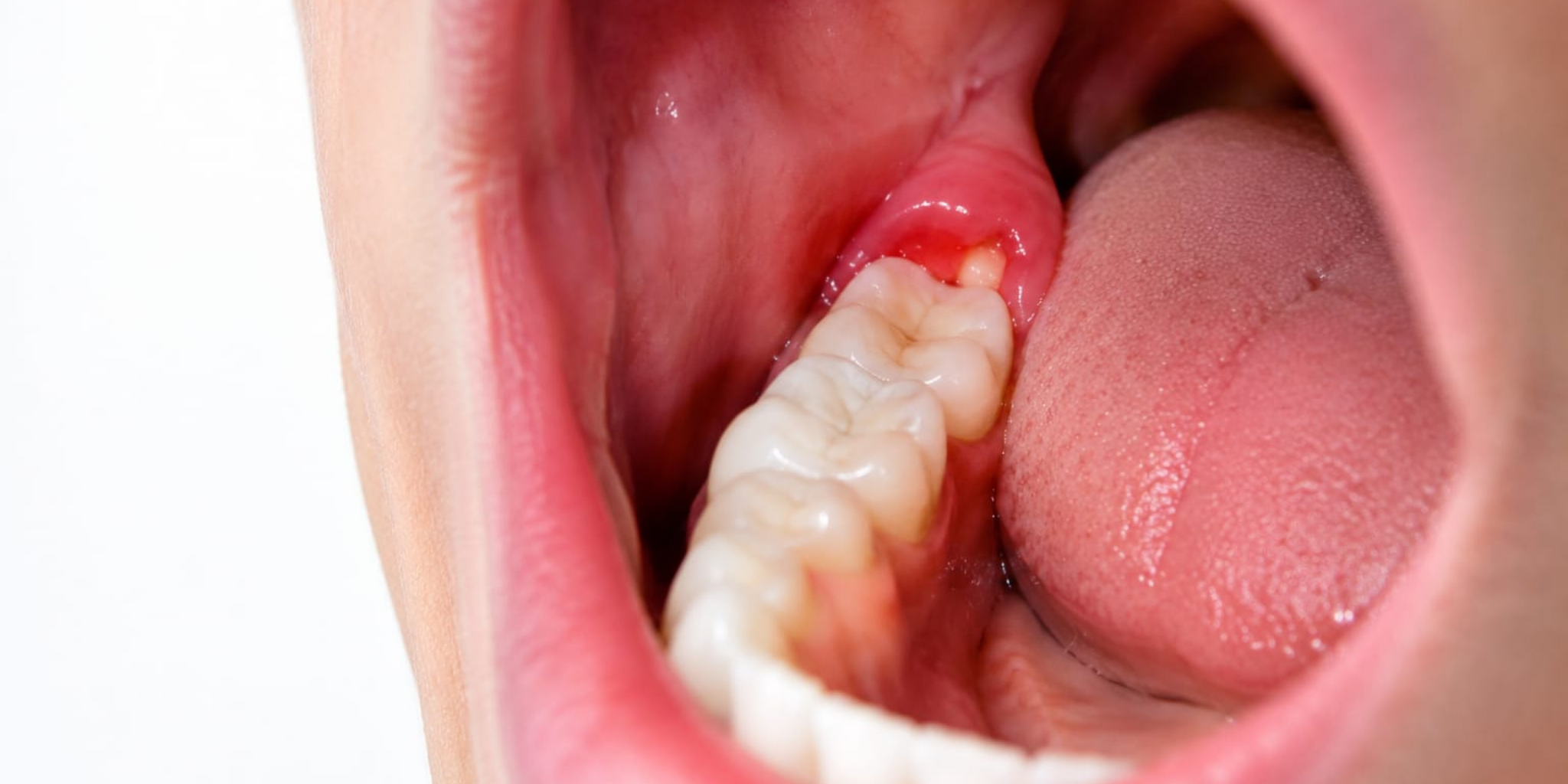
When a wisdom tooth only partially erupts, the flap of gum tissue sitting over it, called the operculum, becomes a trap for food debris and bacteria. This can lead to a localised infection known as pericoronitis, which causes the surrounding gum to become visibly swollen, tender to the touch, and prone to bleeding.
Pericoronitis can develop quickly and is often accompanied by a bad taste in the mouth or difficulty opening the jaw fully.
⚠ When is it urgent? Swelling that extends to the cheek or neck, or difficulty swallowing, requires immediate medical attention.
3. Swelling of the Cheek or Jaw
Visible facial swelling, particularly if it is on one side and comes on relatively quickly ,suggests that an infection may have moved beyond the tooth itself and into the surrounding tissue. This is a sign that the situation has progressed and needs to be evaluated without delay.
4. Pain in the Neighbouring Tooth
An impacted wisdom tooth that is pressing against the second molar beside it can cause pain, damage, or even decay in that tooth over time. Patients sometimes mistake this for a problem with the neighbouring tooth itself, which can make the correct diagnosis less obvious. An X-ray is usually needed to see the full picture.
💡 Tip: If you have unexplained pain in a back tooth that your dentist cannot immediately explain, ask specifically whether your wisdom teeth could be involved.
5. Decay or a Persistent Unpleasant Taste
Partially erupted wisdom teeth are notoriously difficult to clean effectively. The narrow space between the wisdom tooth and the molar in front of it is often impossible to reach with a regular toothbrush or floss. This creates ideal conditions for decay to develop — in the wisdom tooth itself and, in some cases, in the tooth beside it.
A persistent bad taste or odour coming from the back of the mouth is often a sign of active bacterial activity in this area.
6. Headaches or Earaches
The nerves in and around the jaw share pathways with those that supply the ear and temple region. For this reason, wisdom tooth pain can sometimes present as recurring headaches or what feels like an earache, with no obvious dental cause apparent to the patient. If you have been experiencing unexplained pain in these areas alongside any back-of-mouth discomfort, it is worth mentioning to us.
What Happens If It Is Left Untreated?
A reduction in pain does not always mean the problem has gone away. In many cases, the symptoms ease temporarily while the underlying issue continues to develop.
Untreated impacted or infected wisdom teeth can lead to:
- Decay or permanent damage to the second molar
- Recurrent episodes of pericoronitis, each potentially more severe than the last
- A dental cyst, a fluid-filled sac that forms around the tooth and can gradually weaken the jawbone
- Gum disease spreading to the teeth in front of the wisdom tooth
- In rare but serious cases, spread of infection to the throat, neck, or beyond
The earlier a problematic wisdom tooth is identified, the simpler and more straightforward the management tends to be.
When Is Extraction Actually Recommended?
Not every wisdom tooth needs to be removed. A wisdom tooth that has come through fully, sits in a good position, can be cleaned properly, and is not placing any pressure on neighbouring teeth can safely be left in place.
Extraction is generally recommended when:
- The tooth is impacted or growing at an angle with no sign of correcting itself
- There are recurring episodes of pain or infection in the area
- The wisdom tooth is causing damage or decay to the tooth beside it
- Bacteria continue to accumulate beneath a gum flap that cannot be managed at home
- Orthodontic treatment is planned and space needs to be created
- X-rays show evidence of a cyst or bone loss around the tooth
Every case is different. I never recommend extraction without a thorough clinical examination and a careful review of your X-rays. The decision is always made together, with a full explanation of the findings and the options available to you.
What Does the Extraction Involve?

Wisdom tooth extraction is one of the most common procedures we perform, and it is far less daunting than most patients expect.
Simple Extraction
If the wisdom tooth has fully erupted and is accessible, the procedure is similar to a standard tooth extraction. The area is thoroughly numbed with local anaesthesia, and the tooth is gently loosened and removed. You will feel pressure during the procedure, but not pain.
Surgical Extraction
When the tooth is partially or fully impacted, a minor surgical approach is needed. A small incision is made in the gum to access the tooth, and the tooth may be divided into sections to allow it to be removed more comfortably. The area is then cleaned and the gum is carefully closed with stitches.
In both cases, complete numbness is ensured before we begin. If you experience any discomfort at any point during treatment, simply raise your hand and we will adjust immediately.
Recovery
Most patients recover well within three to five days. During this period:
- Apply a cold compress to the cheek during the first 24 hours to reduce swelling
- Take pain relief such as ibuprofen as directed
- Stick to soft foods and avoid very hot drinks
- Avoid smoking, it significantly slows healing and increases the risk of a dry socket
- Follow all post-operative instructions carefully
A dry socket, where the blood clot protecting the extraction site is dislodged, is the most common complication, but it is also preventable with the right aftercare. We will give you clear, detailed instructions before you leave the clinic.
Frequently Asked Questions
Do I have to have my wisdom teeth removed?
Not necessarily. If your wisdom teeth are fully erupted, well-positioned, and not causing any problems, there may be no reason to remove them. However, if they are impacted, infected, or causing damage to neighbouring teeth, extraction is usually the most appropriate course of action. We will advise you honestly based on what we find.
What is the best age to have wisdom teeth removed?
Generally, the late teens to mid-twenties is considered the optimal window. At this stage, the roots are not yet fully formed, the bone is more pliable, and recovery tends to be faster and smoother. That said, extraction can be carried out safely at any age when it is clinically indicated.
Is wisdom tooth extraction covered by CHAS or Medisave?
GH Goh Dental Surgery accepts CHAS, Pioneer Generation, and Merdeka Generation subsidies, and is Medisave accredited. Please contact us directly to find out which subsidies apply to your specific situation and treatment.
How long does the procedure take?
A straightforward extraction typically takes 20 to 30 minutes. A surgical extraction may take longer depending on the position and complexity of the tooth. We will give you a clearer timeframe after your initial assessment.
Will I be in pain after the extraction?
Some tenderness and mild swelling in the days following the procedure is completely normal. This is manageable with standard over-the-counter pain relief and typically resolves within a few days. Severe or worsening pain after the first two to three days should be reported to us promptly, as it may indicate a dry socket or other complication.
A Final Word from Dr. Lynn
Wisdom tooth problems rarely resolve on their own, and waiting often means dealing with a more complicated situation down the line. What might be a straightforward extraction today could become a more involved procedure after months of ongoing infection or bone changes.
If you have been putting up with discomfort at the back of your mouth, or if you simply want to know whether your wisdom teeth are likely to cause problems in the future, come in and let us take a proper look. An X-ray and a quick examination are all it takes to give you a clear picture, and some peace of mind.
Every case is assessed individually and carefully. Whatever we find, we will walk you through the options and make the decision together.
Keep brushing, keep flossing, and never hesitate to reach out.
— Dr. Lynn, GH Goh Dental Surgery
Ready to Take the Next Step?
If you are experiencing any of the symptoms above, we would love to help. Book a consultation with us today, we are here for you and your whole family.
📍 161 Bukit Merah Central, Singapore
📞 +65 6273 3133
💬 WhatsApp us to book your appointment
@gh.goh.dental