Tooth Extraction Aftercare: What You Should and Shouldn't Do
By Dr. Lynn | GH Goh Dental Surgery, Singapore
Once a tooth has been removed, the real recovery process begins. How well you care for the extraction site in the days that follow has a direct impact on how quickly and smoothly you heal.
In my clinic, I give every patient clear aftercare instructions before they leave. But I know that once you get home, it can be easy to forget the details. This guide is here to walk you through everything you need to know, step by step.
How Healing Works
After a tooth is removed, the body immediately begins forming a blood clot in the empty socket. This clot is the foundation of the entire healing process. It protects the bone and nerve endings underneath and allows the gum tissue to begin closing over the site.
Here is what to expect at each stage:
- First 24 hours: A blood clot forms. Mild bleeding and swelling are completely normal.
- Days 2 to 3: Swelling typically reaches its peak, then begins to reduce.
- Days 3 to 5: The gum starts to close. Discomfort decreases noticeably.
- Week 1 to 2: Soft tissue heals significantly. Most patients feel close to normal.
- Several months: The underlying bone gradually fills in and fully heals.
What You Should Do
Immediately After the Procedure
Tip: Keep your head slightly elevated when resting. This reduces blood pressure at the site and helps control both bleeding and swelling.
Managing Swelling and Pain
- Apply an ice pack to the outside of your cheek for 15 minutes on, 15 minutes off during the first 24 hours
- Take your prescribed pain medication exactly as directed
- If over-the-counter pain relief is recommended, ibuprofen tends to work well for both pain and swelling
- Swelling that peaks around Day 2 or 3 and then gradually reduces is a normal part of the healing process
Eating and Drinking
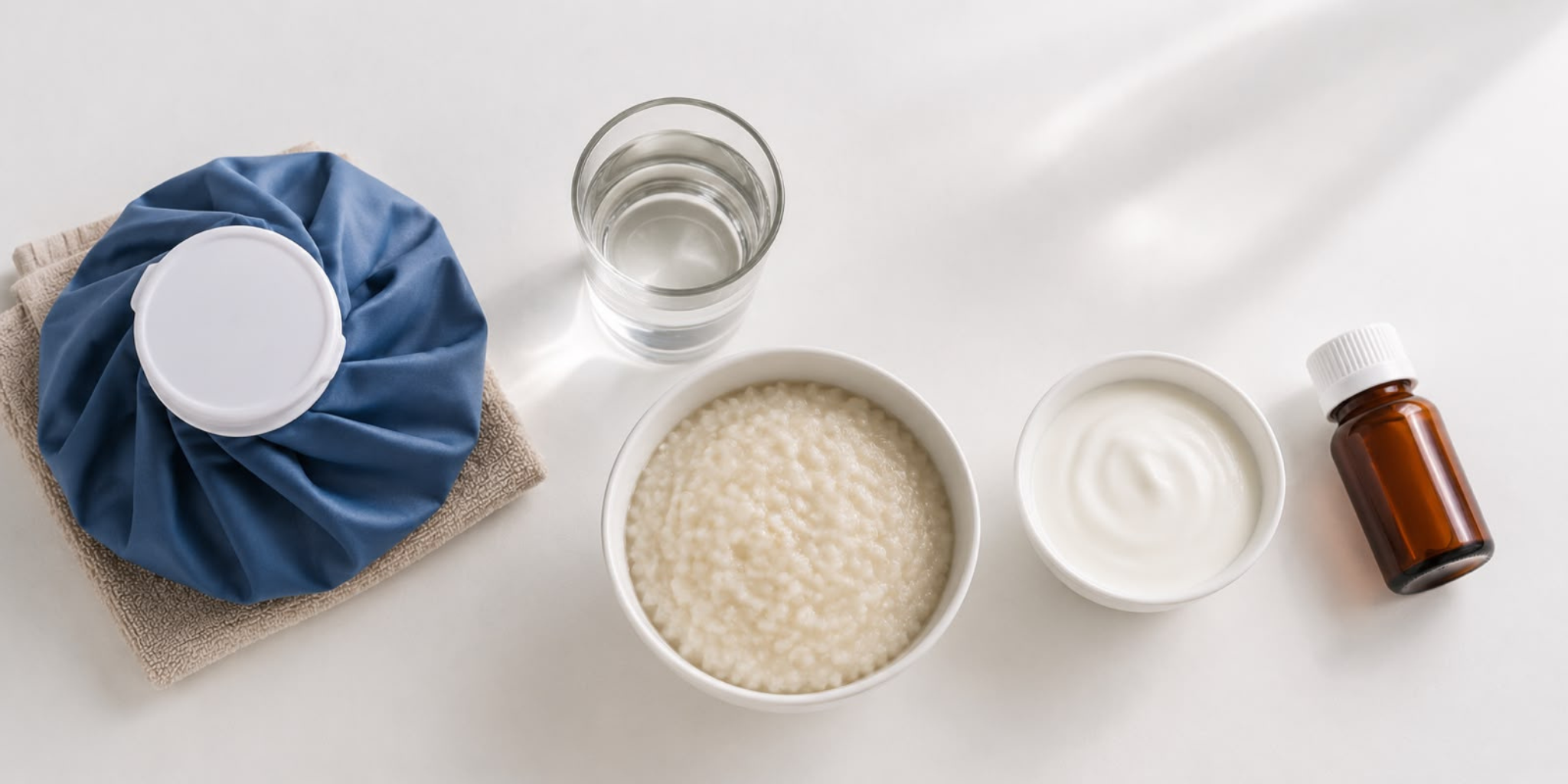
Stick to soft, cool or lukewarm foods for the first few days. Good options include:
- Porridge or congee
- Yoghurt and soft puddings
- Soup (not too hot)
- Mashed potatoes or avocado
- Scrambled eggs
- Soft fruit such as banana
Drink plenty of water throughout your recovery. Staying hydrated supports the healing process.
Oral Hygiene
- Continue brushing your teeth as normal on the day of the extraction, but avoid the extraction site completely
- From the second day onwards, rinse gently with warm salt water after meals. Do not rinse vigorously, simply let the water move around your mouth and spit it out slowly
- Return to gentle brushing around the extraction area once it feels comfortable to do so
What You Should Avoid
No Smoking
Smoking is one of the most significant risk factors for complications after a tooth extraction. It reduces blood supply to the healing site, introduces bacteria, and dramatically increases the risk of dry socket. I strongly advise avoiding smoking for at least 72 hours after the procedure, and ideally for a full week.
No Straws
The sucking motion created when using a straw can dislodge the blood clot from the socket. This is one of the most common causes of dry socket. Avoid straws for at least 24 to 48 hours after the extraction.
No Alcohol
Alcohol slows the healing process and can interact with pain medication or antibiotics. Avoid it for at least 24 hours, and longer if you are taking prescribed medication.
No Hot, Hard, or Spicy Foods
Hot foods and liquids can dissolve the blood clot. Hard or crunchy foods can irritate or damage the extraction site. Spicy foods may cause inflammation and discomfort. Avoid all of these for the first few days.
No Vigorous Exercise
Physical exertion raises your blood pressure and heart rate, which can increase bleeding and slow clot formation. Avoid strenuous activity for at least 24 hours after the procedure.
Do Not Touch the Site
Resist the urge to probe the extraction site with your tongue, finger, or any object. This can disturb the clot, introduce bacteria, and significantly delay healing.
Do Not Rinse Forcefully
Vigorous rinsing or spitting in the first 24 hours can dislodge the protective blood clot. When you rinse with salt water from Day 2, do so gently.
What Is a Dry Socket and How Do You Prevent It?
Dry socket is the most common complication after a tooth extraction. It occurs when the blood clot is dislodged or dissolves before the site has healed, leaving the underlying bone and nerve exposed.
Signs of dry socket include:
- Throbbing pain that intensifies 3 to 4 days after the extraction, rather than improving
- A visible empty-looking socket where the clot should be
- An unpleasant taste or smell coming from the area
The two most important things you can do to prevent dry sockets are to avoid smoking and to avoid using straws. If you suspect you have a dry socket, please contact us promptly. We can clean the site and apply a medicated dressing that provides significant relief.
When to Contact Us Immediately
- Bleeding that does not stop after an hour of firm gauze pressure
- Pain that is worsening rather than improving after Day 3
- Swelling that is spreading to the cheek, neck, or jaw
- Fever or a general feeling of being unwell
- Prolonged numbness that does not resolve after several hours
- Difficulty swallowing or breathing
Frequently Asked Questions
When can I return to normal eating?
Most patients are comfortable returning to a more normal diet within 3 to 5 days. Avoid very hard or crunchy foods until the site feels fully healed.
When can I go back to work?
For a straightforward extraction, most patients feel well enough to return to work the following day. If you had a surgical extraction, I would recommend resting for 1 to 2 days.
Do I need to come back to have stitches removed?
If dissolvable stitches were used, they will break down on their own over 1 to 2 weeks. If non-dissolving stitches were placed, we will schedule a follow-up appointment in 5 to 7 days. We will let you know before you leave the clinic.
When is it safe to smoke again?
I recommend waiting at least 72 hours, and ideally a full week. The risk of dry socket is highest in this window, and smoking significantly increases that risk.
Is the extraction covered by CHAS or Medisave?
GH Goh Dental Surgery accepts CHAS, Pioneer Generation, and Merdeka Generation subsidies, and is Medisave accredited. Please contact us directly to find out which subsidies apply to your specific situation.
A Final Word from Dr. Lynn
A tooth extraction is a very common procedure, and for the vast majority of patients, recovery is smooth and uneventful. Following the aftercare instructions carefully makes a genuine difference, not just in how quickly you heal, but in how comfortable the process feels. If at any point you are unsure about something or feel that things are not progressing as they should, please do not hesitate to reach out. That is what we are here for.
Take good care of yourself, and we will see you at your next visit.
Keep brushing, keep flossing, and never hesitate to reach out.
— Dr. Lynn, GH Goh Dental Surgery
Ready to Take the Next Step?
If you have any concerns about your recovery, or would like to book your next appointment, we are here to help.
📍 161 Bukit Merah Central, Singapore
📞 +65 6273 3133
💬 WhatsApp us to book your appointment
@gh.goh.dental