Why Regular Dental Check-Ups Matter More Than You Think
By Dr. Lynn | GH Goh Dental Surgery, Singapore
You might think a dental check-up is only necessary when something hurts. In reality, one of the biggest benefits of regular dental visits is finding problems before they become painful or complicated.
Many dental problems can develop quietly. Early tooth decay, for example, may not cause any noticeable symptoms, while gum disease can progress before you realise there is a problem. By the time pain, swelling or a loose tooth appears, the condition may already require more extensive treatment.
That is why I encourage my patients to think of dental check-ups as part of preventive care, rather than something you only need when there is an emergency.
Here is what you should know about regular dental examinations and why they matter.
What Is a Dental Check-Up?
A dental check-up is more than simply looking at whether your teeth appear clean.
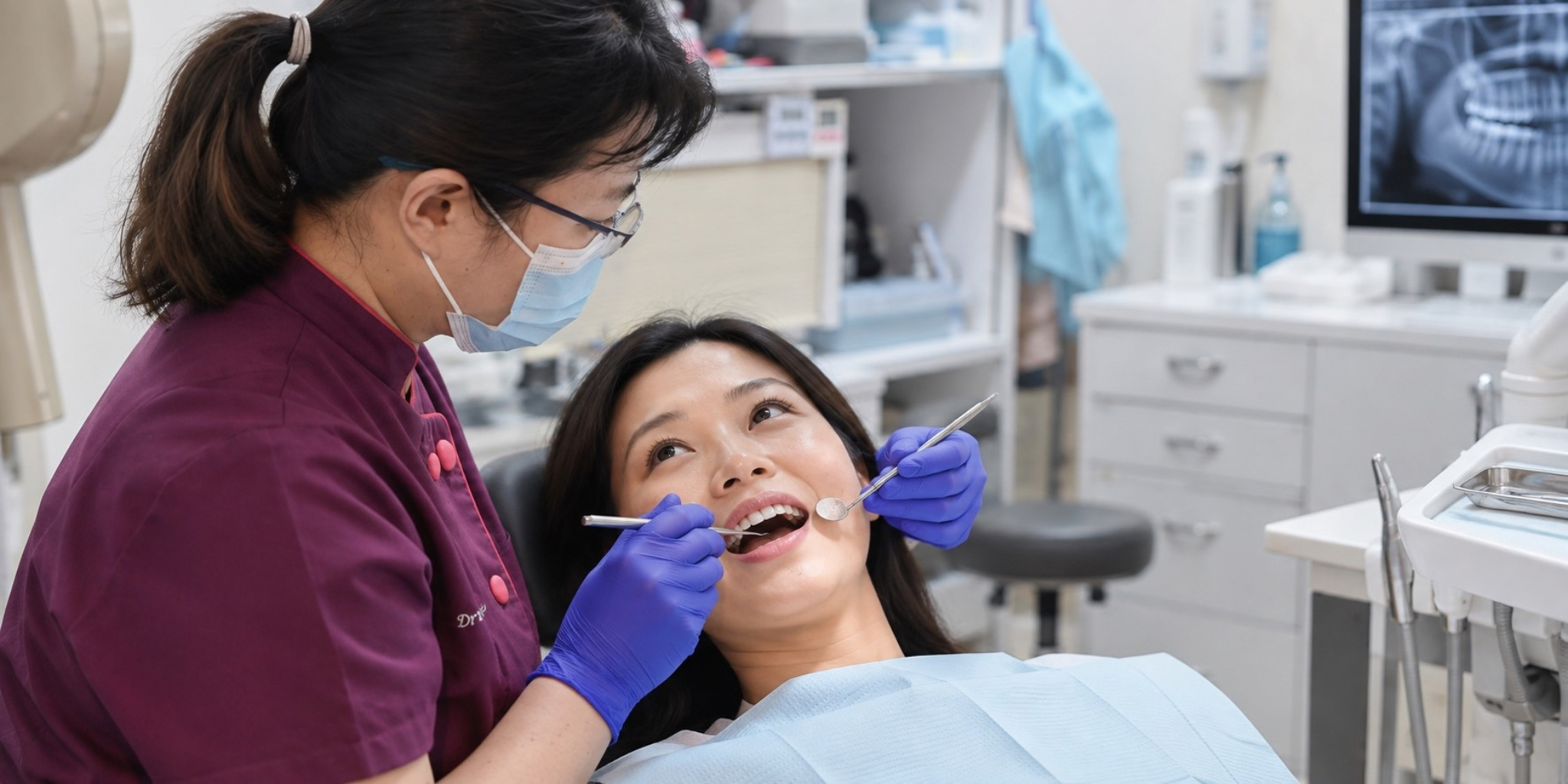
During a routine examination, your dentist assesses the condition of your teeth, gums and other areas of your mouth. Depending on your individual needs, your dentist may also recommend additional procedures or investigations.
A routine dental examination may include checking for:
- Tooth decay and cavities
- Gum inflammation or signs of gum disease
- Plaque and tartar build-up
- Damaged, cracked or worn teeth
- Problems with existing fillings, crowns or other dental work
- Changes in your bite
- Areas that may be difficult for you to clean properly
- Other unusual changes in the mouth
If there is a reason to investigate something further, your dentist may recommend an X-ray or another diagnostic procedure. X-rays are not automatically needed at every visit. They should be recommended based on your individual clinical needs.
How Often Should You Have a Dental Check-Up?
There is no single schedule that is right for everyone.
Your recommended dental visit frequency depends on factors such as your history of cavities or gum disease, your oral hygiene habits, your diet, your overall health and your individual risk of developing dental problems.
Some people may benefit from more frequent visits, particularly if they have a higher risk of tooth decay or gum disease.
For people at lower risk, visits may be less frequent. Singapore HealthHub notes that some low-risk patients may only need to see a dentist once every two years, while higher-risk patients may need more regular monitoring.
The important point is that your dental check-up schedule should be personalized to your needs. If you are unsure how often you should come in, your dentist can assess your oral health and recommend an appropriate interval.
“But My Teeth Feel Fine. Do I Still Need a Check-Up?”
This is one of the most common things I hear from patients.
And I understand the thinking. If nothing hurts, it is easy to assume everything must be fine. The problem is that many dental problems do not cause symptoms in their early stages.
Early tooth decay can be painless. Gum disease may also develop without obvious discomfort, and some patients only become aware of it when they experience bleeding, swelling, loose teeth or other more noticeable changes.
A dental check-up gives us an opportunity to identify these changes earlier, when they may be easier to manage.
Think of it as checking your car before the warning light comes on. Human beings, unfortunately, did not come with a dashboard. 🦷
5 Important Reasons to Keep Up With Regular Dental Check-Ups
1. Catch Cavities Before They Become Painful
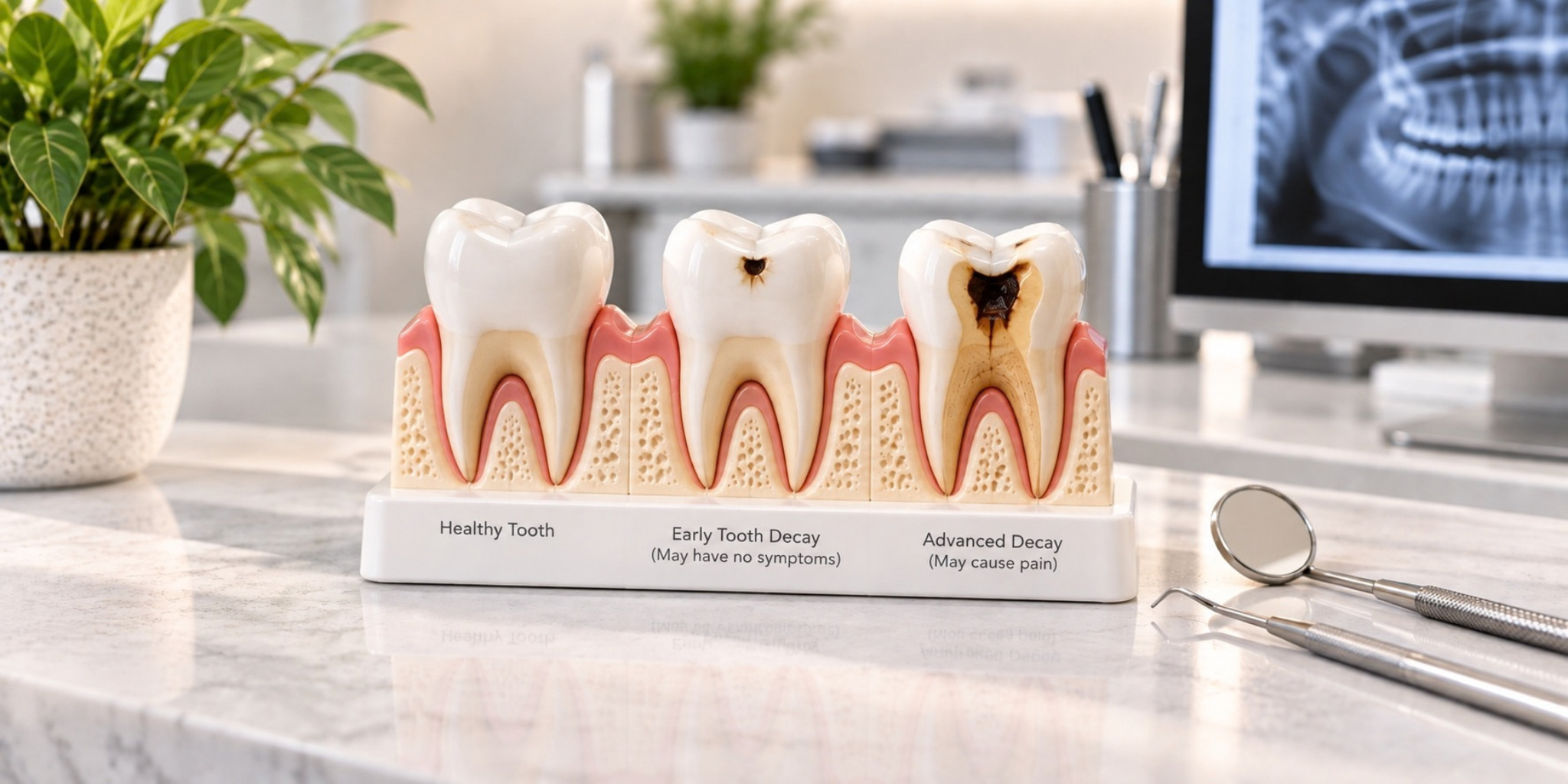
One of the main reasons for regular examinations is to look for signs of tooth decay.
A cavity does not necessarily hurt when it first develops. As decay progresses and affects deeper parts of the tooth, you may eventually experience sensitivity or pain.
Finding decay earlier may allow your dentist to manage the problem before it becomes more extensive.
This is particularly important if you have previously had several cavities or have other factors that increase your risk of tooth decay.
2. Monitor Your Gum Health
Healthy gums are an important part of a healthy mouth.
During your dental examination, your dentist can look for signs of gum inflammation and other changes that may indicate gum disease. Early gum problems can sometimes be easy to overlook because they may not cause significant pain.
Bleeding when brushing, persistent swelling or changes in the gums should not simply be dismissed as something you have to live with. Regular dental visits allow your dentist to monitor your gums over time and advise you on how to improve your oral hygiene if necessary.
3. Identify Problems You May Not Notice Yourself
You know what your teeth normally feel like, but it can be difficult to see what is happening in areas that are harder to access.
A dentist can examine areas around and between the teeth, along the gumline and other parts of the mouth that you may not be able to inspect properly at home.
We can also monitor changes from one appointment to another. Sometimes, it is not one dramatic problem that matters. It is a small change that becomes significant when we compare it with what we saw previously.
4. Get Personalised Advice for Your Oral Health
A check-up is also an opportunity to discuss your daily oral care routine.
Even if you brush twice a day, there may be areas where plaque is consistently being missed.
Your dentist can advise you on:
- Brushing technique
- Cleaning between your teeth
- Fluoride use
- Dietary habits that may increase your risk of cavities
- Managing sensitivity
- Preventing gum problems
- Other preventive measures based on your individual needs
HealthHub also highlights that regular dental visits can help patients receive guidance on brushing, flossing and preventive measures such as fluoride treatments or sealants where appropriate.
5. Keep Track of Your Oral Health Over Time
Your mouth changes as you get older.
Your risk of cavities, gum disease, tooth wear and other dental problems can also change depending on your habits, medications, health conditions and previous dental history.
That is why a dental check-up should not be viewed as a one-time inspection.
Regular visits allow us to monitor your oral health over time, identify changes and adjust preventive advice when necessary.
What Happens During a Routine Dental Examination?
If you have not visited a dentist for a while, you may wonder what actually happens during the appointment.
The exact process depends on your needs, but a routine visit may involve:
Step 1: Reviewing Your Dental History
I may ask about any concerns you have, including sensitivity, pain, bleeding gums or changes you have noticed.
It is also useful to mention any medications or health conditions that may be relevant to your dental care.
Step 2: Examining Your Teeth and Gums
I will examine your teeth, gums and surrounding areas for signs of decay, gum problems, damage or other changes.
Step 3: Assessing Your Oral Health Risks
Your dental history, oral hygiene habits and current findings can help determine whether you are at higher or lower risk for certain dental problems.
Step 4: Additional Investigations When Necessary
If I need more information to assess a particular area, I may recommend an X-ray or another diagnostic procedure.
These investigations are based on clinical need rather than automatically being performed at every routine visit.
Step 5: Discussing the Next Steps
After the examination, I will explain what I have found and whether you need any treatment, preventive care or simply continued monitoring.
Does a Dental Check-Up Include Scaling and Polishing?
Not necessarily.
A dental examination and scaling and polishing are related, but they serve different purposes.
A dental examination focuses on assessing the condition of your teeth, gums and mouth and identifying potential problems. Scaling and polishing is a professional cleaning procedure. Scaling helps remove hardened tartar, while polishing can help remove certain surface stains.
Depending on your oral health and the condition of your teeth and gums, your dentist may recommend professional cleaning as part of your overall preventive care.
What If I Haven’t Seen a Dentist for a Long Time?
You are not alone.
Many people put off dental visits because they are busy, nervous about treatment or simply assume they will go when something starts hurting.
If it has been a long time since your last check-up, there is no need to feel embarrassed. The most useful thing you can do is simply start again.
Your first appointment may involve a more thorough assessment so we can understand your current oral health and determine what needs attention. From there, we can work out a suitable preventive care plan.
Regular Check-Ups Can Help Prevent Bigger Problems
The goal of preventive dentistry is not to keep finding things wrong with your teeth.
It is to reduce the chance of small problems becoming bigger ones.
For example, identifying early tooth decay, monitoring gum health and addressing areas of poor oral hygiene may help you avoid more complicated dental problems later.
HealthHub specifically notes that waiting for symptoms can result in more complicated treatment, while regular dental visits can help identify problems earlier.
This is why I would rather see you for a routine check-up when everything seems fine than only see you when you are already in significant pain.
What Can You Do Between Dental Check-Ups?
Your dental appointment is only one part of maintaining good oral health.
What you do at home every day matters too.
Try to:
- Brush your teeth twice a day with fluoride toothpaste.
- Clean between your teeth daily using floss or an appropriate interdental cleaner.
- Limit frequent sugary snacks and drinks.
- Pay attention to changes such as sensitivity, bleeding gums or persistent bad breath.
- Follow the dental visit schedule recommended for your individual needs.
Regular professional care works best when combined with consistent daily oral hygiene.
Frequently Asked Questions
- How often should I have a dental check-up in Singapore?
There is no universal schedule for everyone. Your dentist should recommend a suitable interval based on your oral health, dental history and individual risk factors. Some people may need more frequent visits, while lower-risk patients may be able to attend less often.
- Can I skip a dental check-up if I have no pain?
It is better not to rely on pain as your only indication that something is wrong. Some cavities and gum problems can develop without obvious symptoms in their early stages.
- Will I need an X-ray during every dental check-up?
Not necessarily. X-rays and other diagnostic procedures should be recommended based on your clinical needs rather than automatically performed at every visit.
- Is a dental check-up the same as scaling and polishing?
No. A check-up is primarily an examination of your oral health, while scaling and polishing is a professional cleaning procedure. Your dentist can advise whether professional cleaning is appropriate for you.
- What should I do if I am nervous about visiting the dentist?
Let your dental team know before your appointment. Sharing your concerns allows us to understand what makes you uncomfortable and help make your visit as comfortable as possible.
A Final Word from Dr. Lynn
You do not have to wait until your tooth hurts to take your dental health seriously.
Regular check-ups give us the opportunity to monitor your teeth and gums, identify potential problems early and help you maintain good oral health over the long term.
Even when everything feels normal, a routine examination can provide useful information about what is happening beneath the surface.
Prevention is always easier when we start early. If it has been a while since your last dental check-up, this may be a good time to schedule one.
Book Your Dental Check-Up at GH Goh Dental Surgery
At GH Goh Dental Surgery, we provide personalised dental care for individuals and families in Singapore. Our team takes the time to understand your oral health needs and recommend appropriate preventive care and treatment
📍 161 Bukit Merah Central, Singapore, #01-3731
📞 +65 6273 3133
💬 WhatsApp us to book your appointment
@gh.goh.dental
We look forward to helping you keep your smile healthy, comfortable and strong for years to come. 🦷