Complete vs Partial Dentures: Which Is the Better Choice?
By Dr. Lynn | GH Goh Dental Surgery, Singapore
One of the questions I often hear from patients who have lost teeth is:
“Should I get complete dentures or partial dentures?”
It is a very understandable question. When you are missing teeth, you want to know what your options are, what the differences are, and most importantly, which one will work best for you.
The answer depends largely on how many natural teeth you still have, the condition of those teeth, your gum and oral health, and what you need your dentures to help you with.
At GH Goh Dental Surgery, we offer both complete and partial dentures. But I would never recommend one simply based on the number of teeth you are missing. Every mouth is different, which is why we first examine your teeth and overall oral health before deciding which type of denture is most suitable.
In this article, I want to explain the difference between complete and partial dentures, who each option may be suitable for, what you can expect when wearing them, and how to look after them properly.
What Are Dentures?
Dentures are removable dental appliances designed to replace missing teeth.
When you lose teeth, it can affect much more than the appearance of your smile. Missing teeth can make chewing more difficult and may affect the way you speak. For some patients, it can also affect their confidence when smiling or talking to other people.
Dentures are designed to help restore some of these everyday functions by replacing missing teeth.
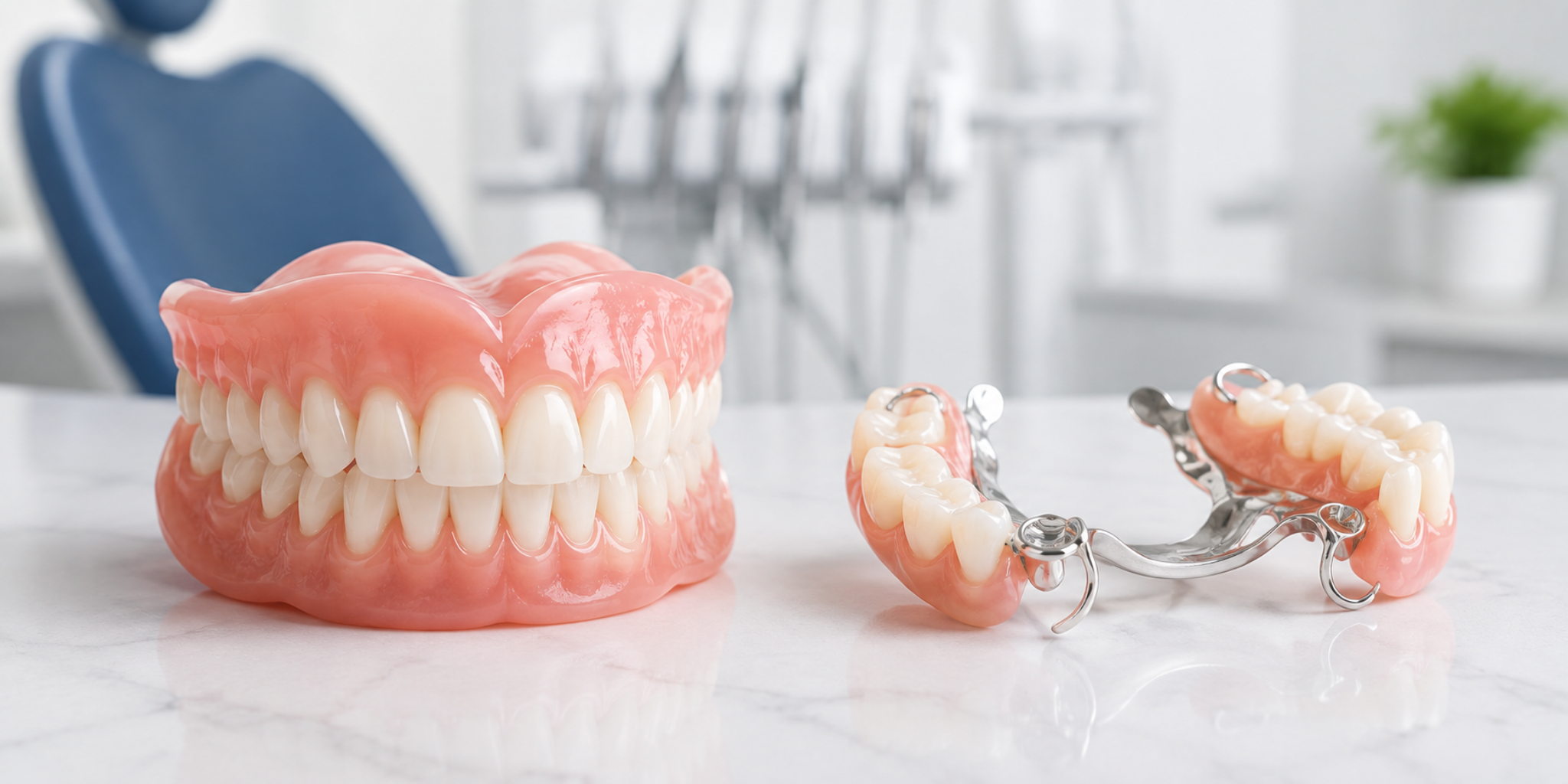
There are two main types I commonly discuss with patients:
- Complete dentures, which replace all the teeth in the upper or lower arch
- Partial dentures, which replace one or more missing teeth when some natural teeth remain
The important thing to remember is that neither option is automatically “better”. They are designed for different situations.
Complete Dentures: When Are They Suitable?
Complete dentures, sometimes called full dentures, are designed to replace all the teeth in one arch when there are no remaining natural teeth in that arch.
Depending on your situation, you may need a complete denture for the upper jaw, lower jaw, or both.
A complete denture can help restore:
- The ability to chew more comfortably
- Speech that may have been affected by missing teeth
- The appearance of the smile
- Support for the lips and facial appearance
- Confidence in everyday social situations
For someone who has lost all or most of the teeth in an arch, a complete denture can provide a practical way to restore the appearance and function of the mouth.
However, getting used to a new complete denture takes some time.
The denture may initially feel unfamiliar or slightly bulky, and you may need some practice with speaking and eating. This is a normal part of the adjustment process, and most people gradually become more comfortable as they get used to wearing their dentures.
Partial Dentures: When Are They Suitable?
Partial dentures are designed for patients who are missing one or more teeth but still have some natural teeth remaining.
The denture fills the spaces created by the missing teeth while working alongside your remaining natural teeth.
Depending on the design, a partial denture may use the remaining teeth to help provide support and stability.
Partial dentures can help restore:
- Chewing ability
- Speech
- The appearance of your smile
- The continuity of your teeth
- Confidence when eating and speaking
An important part of having a partial denture is looking after your remaining natural teeth.
Those teeth continue to play an important role in your oral health and may also contribute to the support and stability of the denture. Good brushing, regular dental check-ups, and proper denture care are therefore particularly important.
Complete vs Partial Dentures: What's the Difference?
The easiest way to understand the difference is to look at the number of natural teeth remaining.
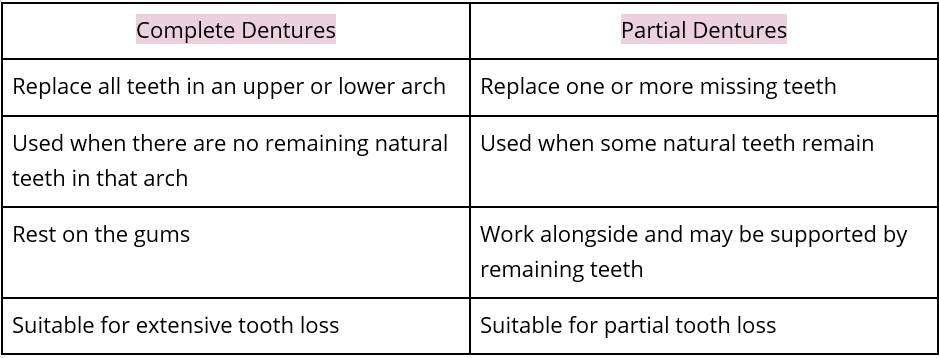
But this is only the starting point.
When deciding which type of denture is appropriate, I also need to consider the condition of your remaining teeth, gums, jaw and overall oral health.
That is why two patients with a similar number of missing teeth may not necessarily receive the same recommendation.
Which Type of Denture Is Better for You?
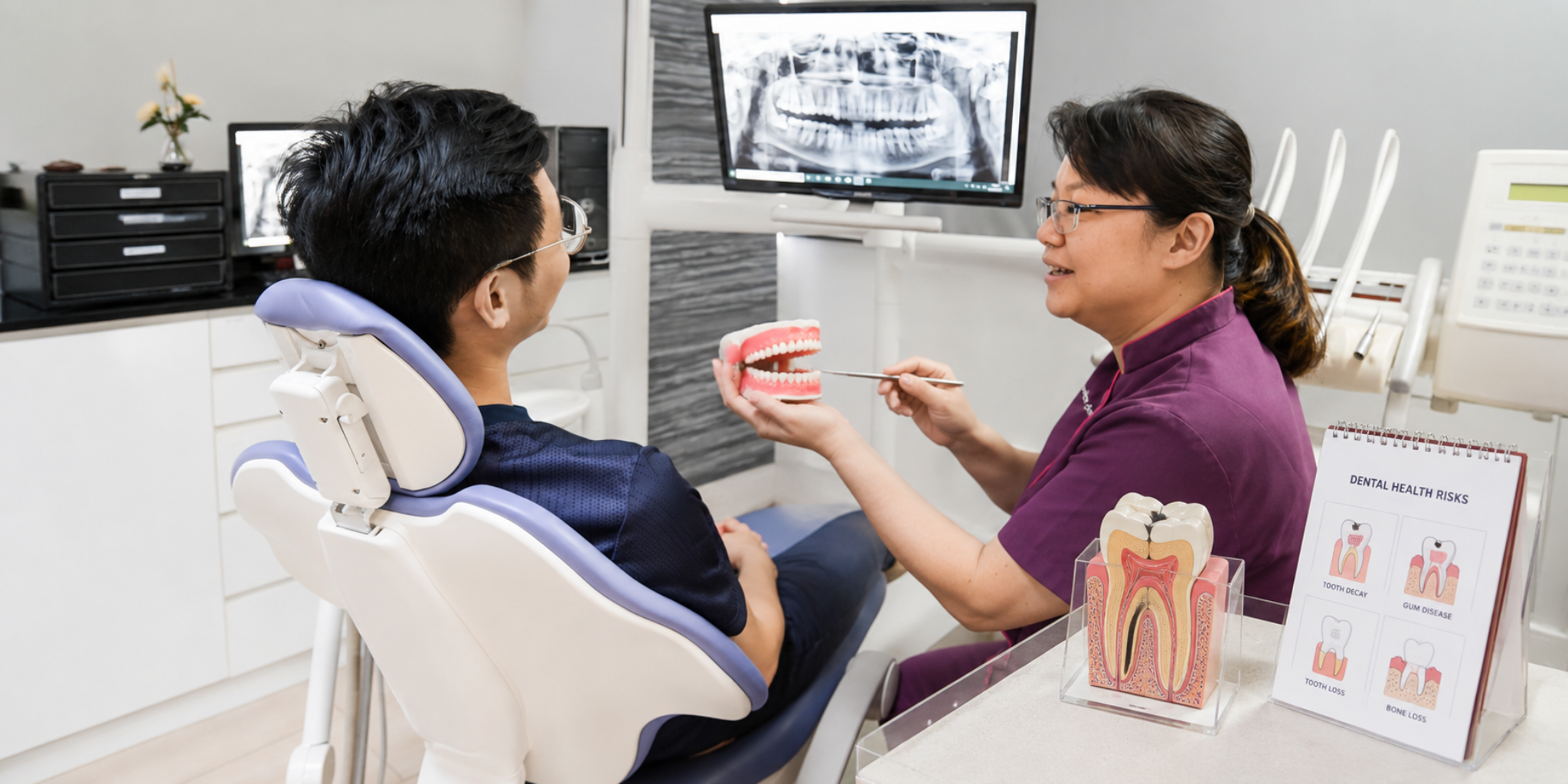
This is where I would encourage patients not to make the decision based on what worked for a friend or family member. Your denture needs to be designed around your mouth.
During your assessment, I may consider several factors.
- How Many Teeth Are Missing?
- The Condition of Your Remaining Teeth
- Your Gum and Oral Health
- Your Ability to Chew and Speak
- Comfort and Fit
If your denture feels loose, uncomfortable, or no longer fits the way it used to, it is worth having it checked rather than simply putting up with it.
- Your Personal Needs and Expectations
What Are the Benefits of Dentures?
Missing teeth can make certain foods difficult to chew. Dentures can help restore tooth surfaces needed for chewing and allow you to enjoy a wider variety of foods.
Improved Speech
Teeth play an important role in the way we form certain sounds. Replacing missing teeth can help improve speech that has been affected by tooth loss.
A More Complete Smile
Missing teeth can change the appearance of your smile. Dentures can replace those missing teeth and create a more complete appearance.
Greater Confidence
For some patients, the biggest change is simply feeling more comfortable smiling, speaking, and eating around other people. It is not only about replacing teeth. It is about helping you feel more comfortable in your everyday life.
What Is It Like Getting Used to New Dentures?
I always tell my patients that getting used to dentures takes a little patience.
Your new dentures may feel strange at first. You may notice that your mouth produces more saliva than usual, or that speaking and eating feel different.
This does not necessarily mean that something is wrong. Your mouth needs time to adjust to the new appliance.
When eating, start with softer foods and small pieces. As you become more comfortable, gradually introduce foods with different textures.
For speaking, practising out loud can be helpful. Reading a book or newspaper aloud at home is a simple way to become more familiar with speaking while wearing your dentures.
If, however, your dentures consistently cause pain, rub against your gums, click when you speak, or feel loose, please come back and have them checked.
You should not have to simply tolerate an uncomfortable denture.
How Should You Look After Your Dentures?
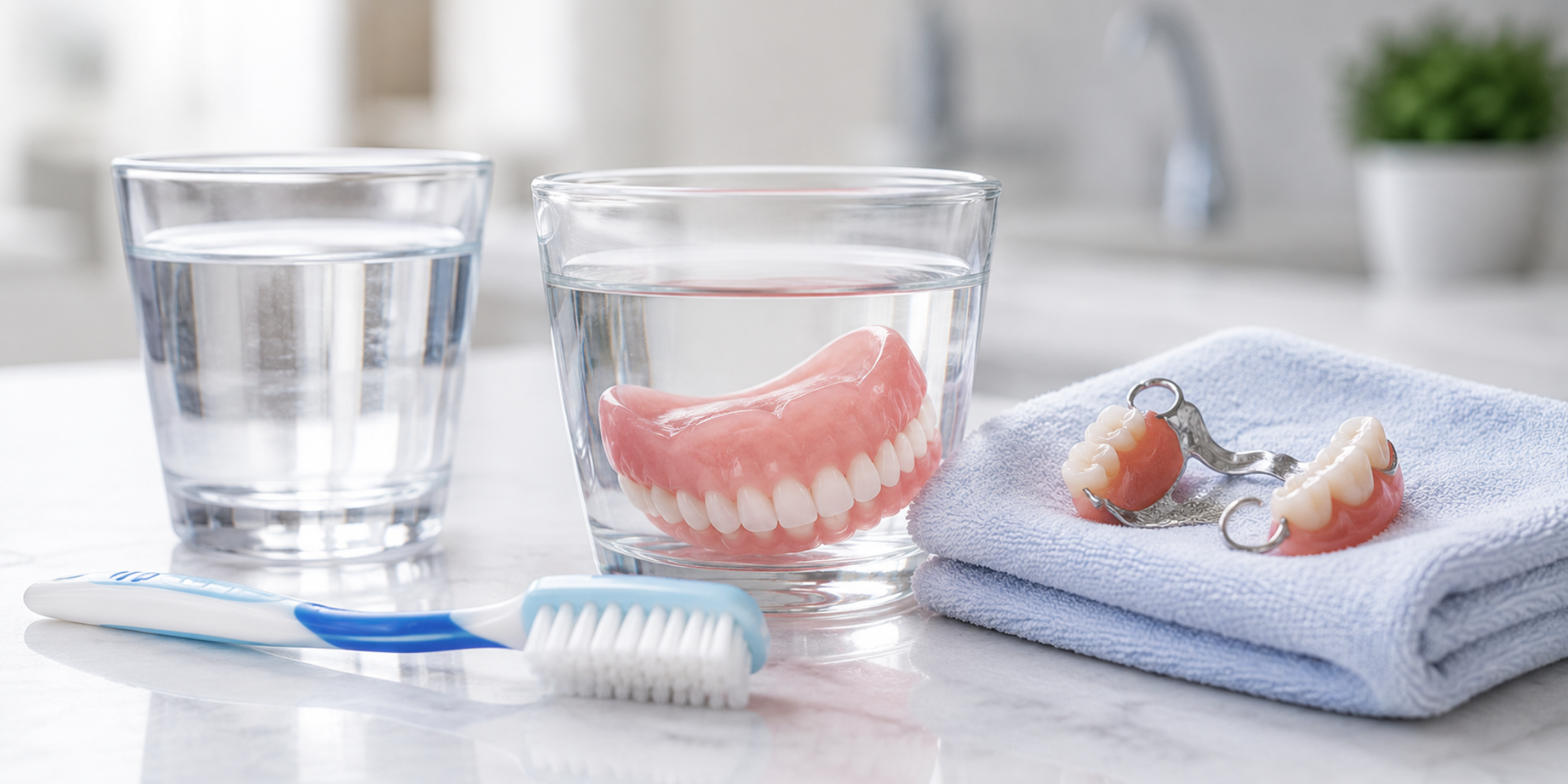
Clean Your Dentures Every Day
Food particles, plaque and stains can build up on dentures just as they can on natural teeth. Remove your dentures and clean them regularly using a soft denture brush and an appropriate denture-cleaning method. Avoid using very hot or boiling water, as excessive heat can alter the shape of the denture.
Look After Your Remaining Teeth
If you have partial dentures, do not forget about the natural teeth that remain. Continue brushing your natural teeth and cleaning around the areas where the denture sits. These teeth are important for maintaining your overall oral health.
Give Your Gums a Rest
Unless your dentist has given you different instructions for your particular situation, dentures are generally removed at night. This gives your gums and oral tissues time to rest and also allows you to clean and soak the dentures properly.
Store Them Properly
When your dentures are not being worn, keep them moist according to your dentist’s instructions. Do not leave them exposed to dry out, and avoid hot water.
Have Your Dentures Checked
Dentures do not necessarily remain perfectly fitted forever. Your mouth naturally changes over time, including changes to the gums and underlying bone. This can affect how your denture fits. If you notice that your denture has become loose, uncomfortable, or damaged, arrange a dental assessment. An adhesive should not be used simply to compensate for a poorly fitting denture. A dentist should check the fit and determine whether an adjustment, relining, repair, or replacement may be needed.
What Happens If My Denture No Longer Fits Properly?
This is something I want patients to take seriously.
You may notice that your denture:
- Feels loose when you talk or eat
- Causes sore spots or irritation
- Moves around more than it used to
- Makes clicking sounds when you speak
- Has become uncomfortable
- Is worn, cracked, or damaged
Sometimes the solution is a simple adjustment. In other situations, the denture may need to be relined, repaired, or replaced.
The important thing is not to ignore the problem.
An ill-fitting denture can cause ongoing irritation, and changes in the mouth can affect denture stability over time. GH Goh Dental Surgery specifically advises patients who are considering dentures or need a replacement to have their fit and oral condition assessed.
Frequently Asked Questions
Can I get dentures if I still have some natural teeth?
Yes. If you have some natural teeth remaining but are missing one or more teeth, a partial denture may be considered. Your dentist will assess the condition of your remaining teeth and overall oral health before recommending the most suitable option.
Are complete dentures better than partial dentures?
Neither is automatically better. Complete and partial dentures are designed for different situations. Complete dentures replace all teeth in an arch, while partial dentures replace some missing teeth when natural teeth remain.
How long does it take to get used to dentures?
Everyone adjusts differently. New dentures can feel unfamiliar at first, and eating and speaking may require some practice. Most people gradually become more comfortable with time. If your dentures continue to cause pain or significant difficulty, they should be checked by your dentist.
Can I sleep with my dentures in?
Dentures are generally removed at night to allow the gums and oral tissues to rest, unless your dentist has specifically advised otherwise for your situation.
How do I clean my dentures?
Remove your dentures and clean them daily using a soft brush and an appropriate denture-cleaning method. Avoid very hot or boiling water, which can cause dentures to warp. Your dentist can recommend the most appropriate cleaning routine for your particular denture.
How often should dentures be replaced?
There is no single replacement schedule that applies to everyone. Dentures may need to be adjusted, relined, repaired, or replaced when they become loose, uncomfortable, damaged, or no longer fit properly. Regular dental reviews can help determine when your denture needs attention.
Can dentures improve my quality of life?
They can help restore functions affected by missing teeth, including chewing and speaking, while also improving the appearance of your smile. For many patients, being able to eat, speak and smile more comfortably can make a meaningful difference to everyday confidence and quality of life.
A Final Word from Dr. Lynn
Losing teeth can be difficult, but it does not mean that you have to accept difficulty eating, speaking, or feeling confident about your smile as part of everyday life.
Complete and partial dentures are both options for replacing missing teeth, but the right choice depends on your individual circumstances.
If you still have some natural teeth, a partial denture may be appropriate. If all the teeth in an arch are missing, a complete denture may be considered. But there are other factors we need to look at as well, including the health of your remaining teeth, your gums, your oral health, and how well the denture can fit and function in your mouth.
My advice is always to have your teeth and gums properly assessed before deciding on a denture.
A well-planned and properly fitting denture should not simply replace missing teeth. It should help you eat more comfortably, speak more confidently, and feel more at ease with your smile.
At GH Goh Dental Surgery, we take the time to understand each patient’s needs and recommend a denture solution based on their individual oral health and circumstances.
Keep brushing, keep flossing, and take good care of your smile.
— Dr. Lynn, GH Goh Dental Surgery
Ready to Take the Next Step?
If you are missing teeth, experiencing difficulty with your current dentures, or are unsure whether complete or partial dentures may be suitable for you, we are here to help.
Book a consultation with GH Goh Dental Surgery for a professional assessment and personalised advice on your denture options.
📍 161 Bukit Merah Central, Singapore
📞 +65 6273 3133
💬 WhatsApp us to book your appointment
@gh.goh.dental